


Meanwhile: Chinese hackers maintain access to critical infrastructure, VMware customers revolt over 10x price hikes, and Microsoft slashes AI pricing to capture SMBs.
AWS Unveils Graviton5 and Trainium3 Chips at re:Invent 2025
Amazon Web Services announced Graviton5 processors at its re:Invent conference in Las Vegas this week. The chips deliver 25% higher performance than the previous generation with 192 cores per chip and 5x larger cache.
AWS also revealed Trainium3 UltraServers for AI training. CEO Andy Jassy posted that Trainium2 is already generating significant revenue.
The company introduced Database Savings Plans offering up to 35% discounts and Lambda Durable Functions that coordinate multi-step workflows over extended periods—up to one year—without paying for idle compute.

Why this matters: Custom silicon lets hyperscalers capture margins that would otherwise flow to Nvidia and Intel. When AWS offers 35% database discounts after years of complaints, it signals genuine competitive pressure. Cloud platforms are vertically integrating—chips, databases, frameworks—creating powerful moats that also invite regulatory scrutiny.
Sources: AWS Blog, Amazon News
SpaceX Approved for Florida Starship Pad, Eyes 76 Annual Launches
The U.S. Air Force granted SpaceX environmental approval to develop Space Launch Complex-37 at Cape Canaveral for Starship operations. The site could host up to 76 launches and 152 landings annually.
Construction has already begun. SpaceX announced on December 1 that with three Florida pads, Starship will support national security and Artemis moon missions.
The company completed 160 launches in 2025—153 Falcon 9 missions and multiple Starship tests—establishing an unprecedented launch cadence that's reshaping space economics.
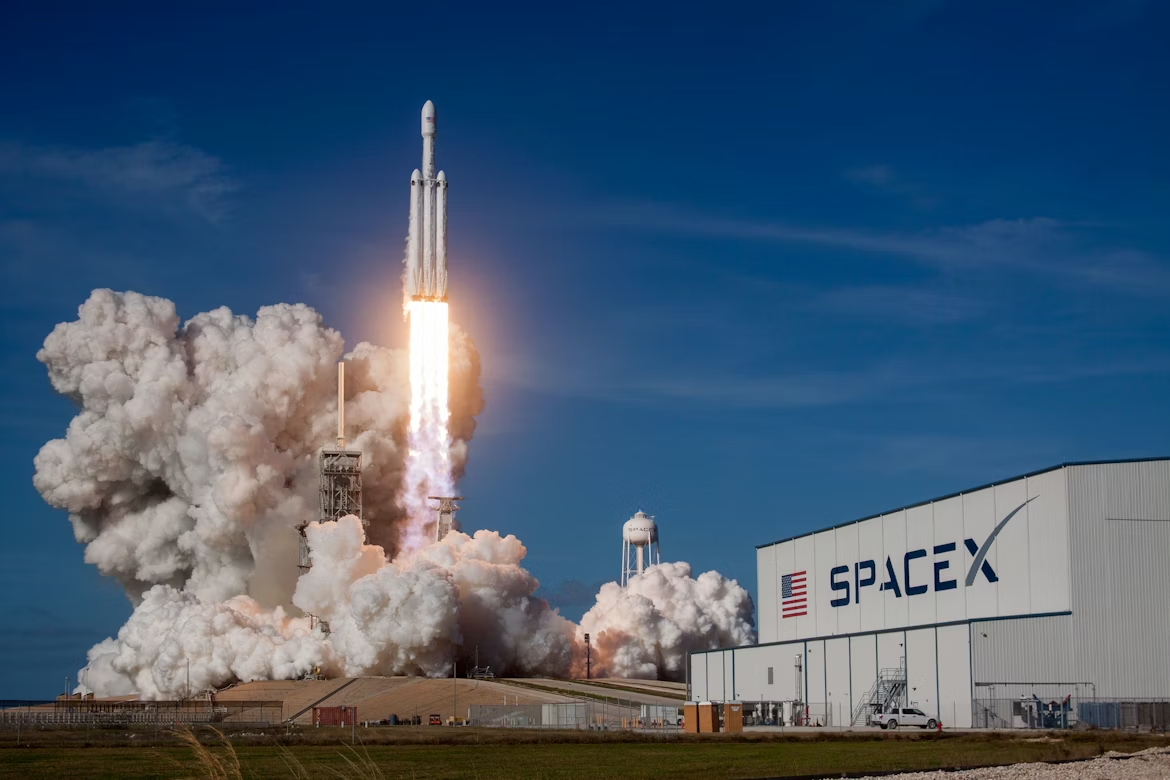
Why this matters: SpaceX isn't just launching more—it's industrializing orbital access. The 160 missions in 2025 exceed global launch output from any pre-2020 year. This tempo enables constellation replenishment, rapid defense deployments, and Mars missions requiring dozens of tanker flights. When the Pentagon accelerates approvals, it signals military planners view SpaceX as strategic infrastructure.
Sources: Space.com, NASASpaceFlight
OpenAI Declares "Code Red" as Google Gemini Gains Ground
Sam Altman issued an internal "code red" memo directing OpenAI to prioritize ChatGPT quality improvements after Google's Gemini 3 outperformed ChatGPT on several benchmarks.
The directive delays planned advertising initiatives and AI agent launches. OpenAI still commands 70% of AI assistant usage and processes 10% of all search queries with over 800 million weekly users.
But Google's momentum is undeniable. Gemini app has 650 million monthly active users, while AI Overviews reaches 2 billion through search integration.

Why this matters: When the company that started the AI revolution declares code red, it confirms no lead is permanent. OpenAI raised capital at $500 billion valuation assuming sustained advantage. If Google matches quality while leveraging search distribution, OpenAI's path to justifying that valuation narrows dramatically. Competition benefits users through accelerated innovation.
Source: Bloomberg
Malaysia Resumes MH370 Search After 11 Years
Malaysia's government announced Ocean Infinity will resume searching for Flight 370 wreckage starting December 30. The marine robotics firm operates under a $70 million "no-find, no-fee" contract.
The search targets a 15,000-square-kilometer area of the southern Indian Ocean using advanced underwater drones. Ocean Infinity will conduct 55 days of intermittent searching.
Flight 370 vanished March 8, 2014 carrying 239 people from Kuala Lumpur to Beijing. Despite the most expensive aviation search in history, only scattered debris washed ashore on African coastlines.

Why this matters: Ocean Infinity's model only works if robotics and algorithms analyzing drift patterns, satellite data, and ocean topography have genuinely advanced beyond 2018 failures. If they succeed, it validates private companies with cutting-edge technology solving problems that defeated government efforts—a model applicable to other "impossible" challenges as technology matures.
Chinese State Hackers Used BRICKSTORM Backdoor in VMware Environments
U.S. and Canadian cyber authorities warned that Chinese state-backed actors used a backdoor dubbed BRICKSTORM to maintain long-term access into critical infrastructure. The threat actors exploited VMware environments to exfiltrate credentials and evade detection through encrypted covert channels.
The campaign targeted energy, telecommunications, and government networks. BRICKSTORM operates by hiding within legitimate VMware management traffic, making detection extremely difficult.
The disclosure comes amid broader concerns about Chinese penetration of U.S. critical infrastructure, with cybersecurity leaders telling Congress that energy systems are already compromised.

Why this matters: BRICKSTORM operates within internal VMware traffic—precisely where most security tools struggle. Compromising VMware gives attackers access to multiple systems simultaneously. The "already compromised" assessment suggests persistent presence enabling coordinated disruption during conflicts. Revealing BRICKSTORM helps defenders but tips off adversaries, suggesting threats reached critical levels.
Sources: CISA
Broadcom Reaches $1.8 Trillion Valuation on AI Chip Dominance
Broadcom's stock pushed its market capitalization to $1.8 trillion this week, positioning it among the world's most valuable companies. The surge reflects booming demand for custom AI accelerators.
Broadcom projects AI semiconductor revenue of $6.2 billion in Q4 2025—up 66% year-over-year. The company has booked multi-billion-dollar orders from hyperscalers including a reported deal with Meta for custom TPU chips.
Infrastructure software—dominated by VMware—now contributes 40-43% of revenue with higher margins than semiconductors. Analysts set a $460 price target, citing potential Google TPU sales and OpenAI partnerships.

Why this matters: While Nvidia dominates headlines, Broadcom quietly captures the highest-value customers with custom silicon optimized for specific workloads. Hyperscalers prefer bespoke chips delivering better performance-per-watt at lower costs—requiring billion-dollar commitments only giants can afford. This creates a two-tier market: Nvidia serves broad markets, Broadcom captures premium customers. Vertical integration across chips and software creates moats—or regulatory targets.
Source: FinancialContent
Microsoft Launches Copilot Business for SMBs at $21/Month
Microsoft announced December 1 the launch of Microsoft 365 Copilot Business targeting companies with fewer than 300 users. The offering costs $21 per user monthly—$9 less than the standard Copilot.
Copilot Business delivers the same AI-powered productivity features as the $30 Copilot but at a more accessible price point. Microsoft is offering bundled packages combining Microsoft 365 base SKUs with Copilot Business.
Limited-time promotions through March 31, 2026 provide 15% discounts on standalone Copilot Business licenses. The launch aims to accelerate AI adoption among small and medium businesses.

Why this matters: The 30% price cut signals AI productivity tools are transitioning from early adopters to mass market. At $21, Copilot becomes incremental cost rather than major budget decision. Bundling makes AI default rather than optional. Promotional discounts create urgency to lock in customers before Google and others launch competitive tools. Microsoft is using pricing to capture market share before alternatives mature.
Source: Microsoft Partner Center
VMware Licensing Controversy Intensifies as Customers Report 10x Price Increases
Broadcom's VMware restructuring continues generating backlash. While Dutch bank ING announced expanded VMware Cloud Foundation 9.0 deployment, most customers report price increases of 8-15x with no perceived added value.
Broadcom eliminated perpetual licenses, increased minimum core requirements from 16 to 72, and reduced product bundles from 168 to just 4. The company slashed authorized Cloud Service Providers from 4,500 to roughly 300.
European cloud association CISPE filed legal challenges seeking to overturn the EU's merger approval. Despite backlash, Broadcom reports $30 billion in VCF total contract value over three years.
Why this matters: Broadcom bets enterprises are trapped—migration is painful and risky enough that 10x prices remain cheaper than switching. Some sign massive deals (ING), others plan exits to OpenStack or hyperscalers. The real test comes in 2026-2027 renewals. If customers defect significantly, the bet fails. If they grudgingly renew, it proves software lock-in is more durable than believed—and invites copycat strategies.
Source: Simply Wall St
Sources verified as of December 6, 2025


