
Quantum computing moved from lab demonstrations to defense applications, while Big Tech valuations reached historic milestones on AI enthusiasm. Elon Musk announced audacious chip production ambitions that could reshape semiconductor economics, Amazon unveiled enterprise satellite internet to challenge Starlink, and Alphabet closed in on a $4 trillion market cap. The week underscored how AI infrastructure—from quantum sensors to custom silicon—is attracting unprecedented capital and strategic focus.
Quantum drones for defense: IonQ x Heven AeroTech
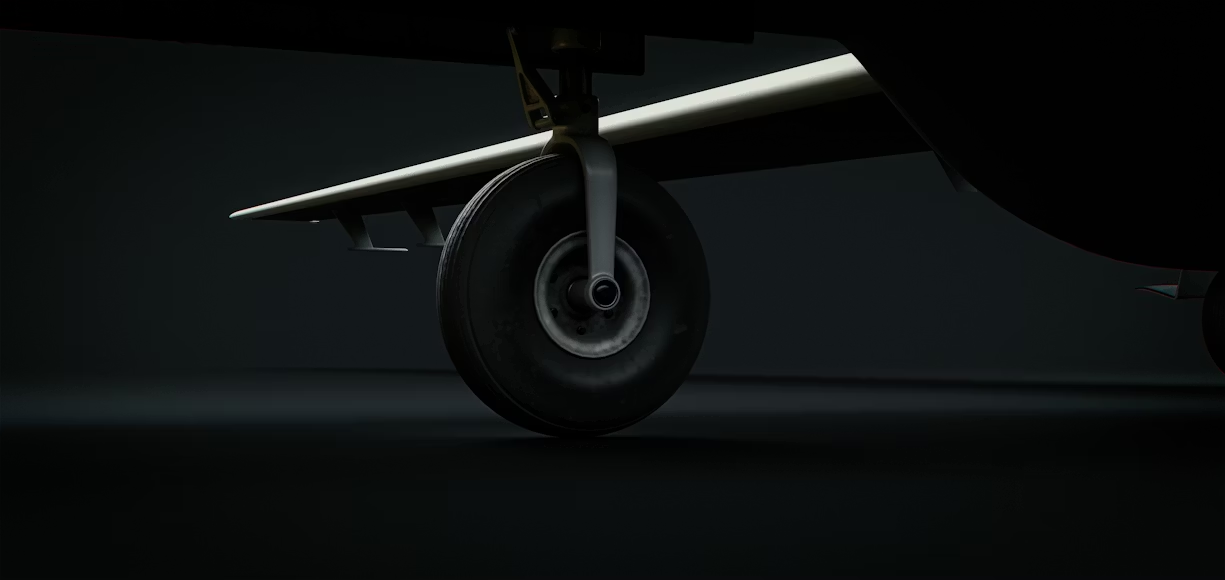
IonQ entered a strategic partnership with Heven AeroTech to integrate quantum sensing, secure networking, and navigation into hydrogen powered drones. The Z1 platform with 600 mile range and over 10 hour endurance will be the primary test system. Quantum modules aim to support fleet routing algorithms, GPS independent positioning, and encrypted drone to drone communication. IonQ has already secured approximately four hundred million dollars in Air Force Research Lab contracts and Heven will add IonQ executive Jordan Shapiro to its board.
Why it matters: Quantum systems are now entering real hardware and mission profiles rather than remaining confined to research labs. GPS denial has become a central battleground capability, so navigation and encryption backed by quantum architecture offers meaningful strategic value. Hydrogen propulsion adds energy independence, mobility, and endurance to the mix. This is an early signal that defense could commercialize quantum faster than the private sector.
Alphabet inches toward four trillion dollars

Alphabet touched a valuation of three point nine trillion dollars after a five percent jump driven by reports that Meta may procure large volumes of Google TPU chips. Google stock has climbed about seventy percent this year, outpacing Microsoft and Amazon. Investor confidence surged after Gemini 3 launched with strong reception and reversed earlier concerns that Google lagged behind in AI leadership.
Why it matters: This rally challenges the idea that new AI entrants would threaten incumbents. Google has shown that AI can reinforce search economics instead of replacing them. If Meta becomes a TPU customer, it would be a landmark moment and a real challenge to Nvidia concentration. The rapid valuation climb reflects the premium placed on companies with proprietary compute, fabrication partnerships, and cloud distribution at global scale.
Musk claims Tesla will outproduce all AI chipmakers combined
Elon Musk stated that Tesla is building AI manufacturing capacity that could exceed output from Nvidia, AMD, Intel, and other players together. Tesla chips AI5 and AI6 are in development with claims of one third the power draw of Nvidia Blackwell at ten percent of cost. Musk floated the idea of a TeraFab facility targeting more than one hundred thousand wafer starts a month.
Why it matters: Tesla vehicles and robots could generate demand for chips at unprecedented scale if autonomy reaches mass adoption. Vertical integration would allow Tesla to reduce inference cost and dependence on external fabs. The risk factor remains significant since chip manufacturing is capital heavy and takes years to mature. However, the signal is clear. AI scale companies want full-stack silicon control.
Amazon launches Leo Ultra enterprise satellite network
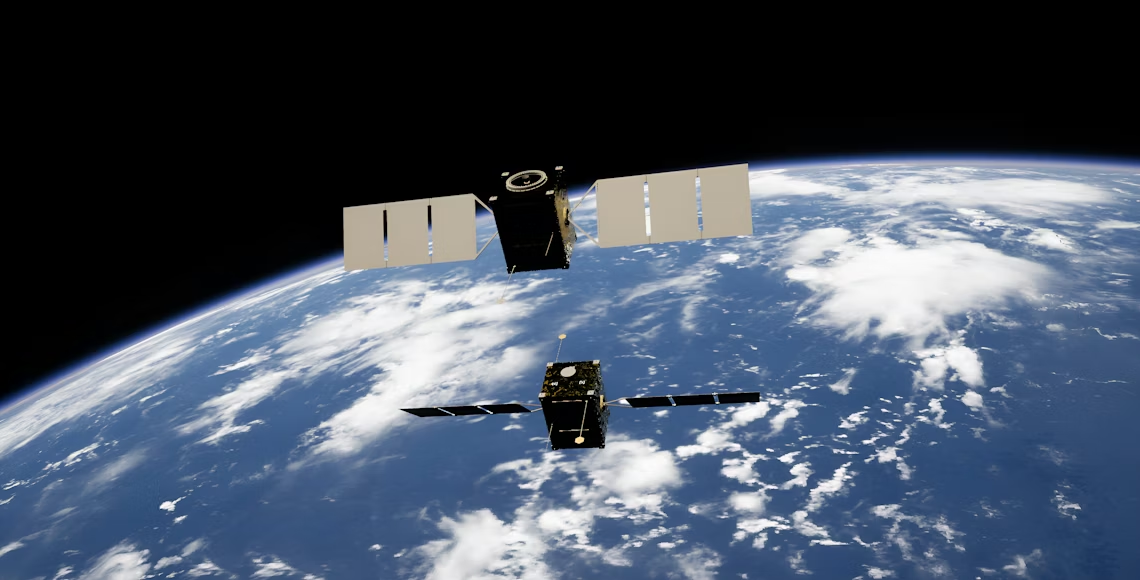
Amazon unveiled Leo Ultra, an enterprise terminal offering one gigabit per second download and direct AWS routing that bypasses the public internet. The phased array system runs on custom silicon and connects through the Leo satellite network which has more than one hundred fifty satellites already deployed. Amazon must launch over sixteen hundred satellites by July 2026 for regulatory compliance.
Why it matters: Satellite networks are no longer primarily consumer internet products. They are becoming distributed cloud extensions where compute and routing occur beyond terrestrial constraints. AWS integration is Amazon’s key differentiator and positions Leo for industrial, maritime, remote mining and autonomous operations where fiber cannot reach.
Harmonic Hits $1.45B to Build Hallucination-Free AI

Harmonic, co-founded by Robinhood CEO Vlad Tenev, raised 120 million dollars at a 1.45 billion dollar valuation, totaling 295 million across three rounds in fourteen months. Backed by Ribbit Capital, Sequoia, Kleiner Perkins and Emerson Collective, the startup is developing Mathematical Superintelligence, an AI that reasons through formal logic instead of predictive text. Its Aristotle model produced computer-verified proofs at International Mathematical Olympiad gold-medal level using Lean 4 proof tooling.
Why it matters: Harmonic targets AI’s biggest flaw: hallucination. If its formal reasoning model scales beyond math into science, engineering and finance, it could open markets where correctness matters more than fluency. A pre-revenue unicorn at this speed shows investor belief that accuracy is the next AI frontier.
Overstory Raises $43M to Stop Utility-Sparked Wildfires

Amsterdam based Overstory secured 43 million dollars led by Blume Equity to expand its satellite-based wildfire prevention platform for utilities. Its new Fuel Detection Model identifies the exact vegetation most likely to ignite, replacing broad-zone risk maps. Overstory now supports six of North America’s largest utilities and appointed former Eventbrite CMO Tamara Mendelsohn as COO.
Why it matters: Utility fires cost lives and trigger multibillion-dollar liabilities, as PG&E proved. Overstory offers precision vegetation monitoring at scale, reducing shutdowns, trimming costs and catastrophic fire risk. It is climate tech with measurable prevention ROI.
Sources verified as of November 29, 2025


