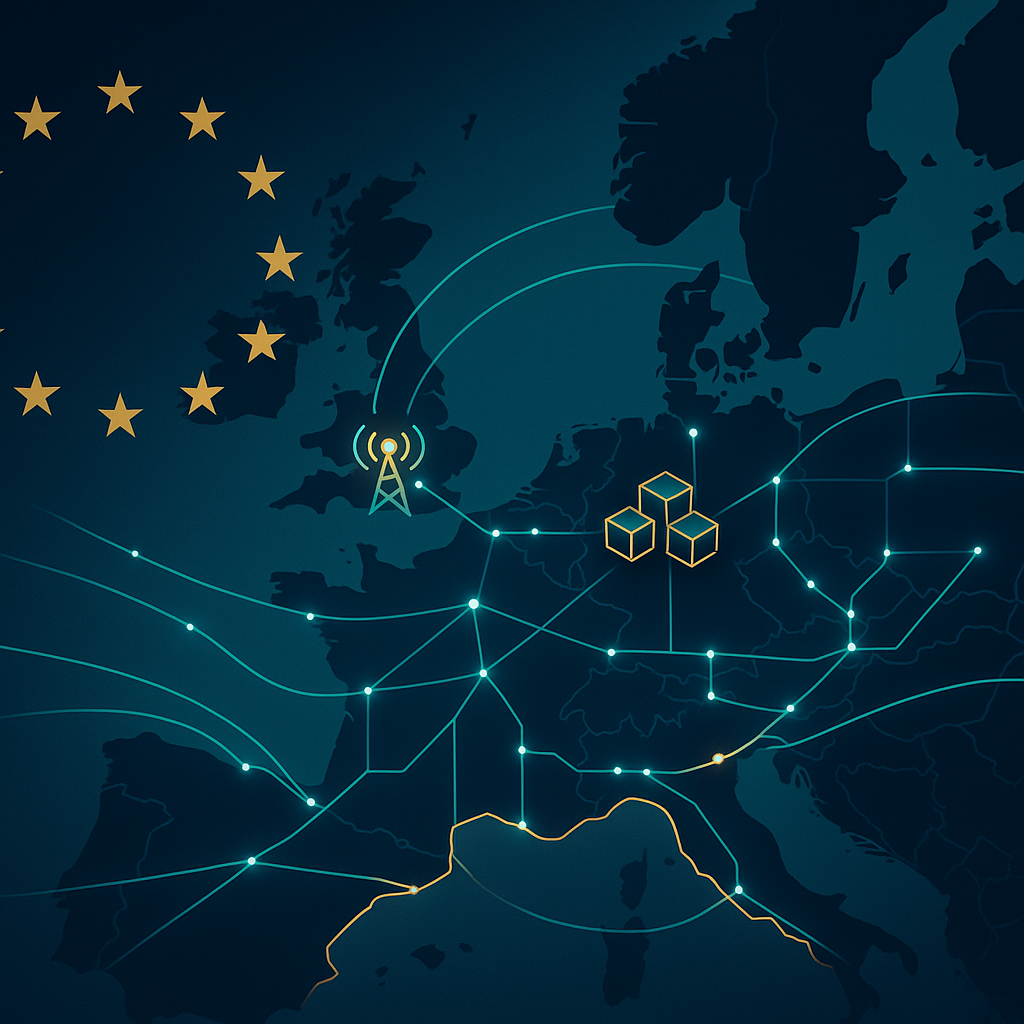

As Europe approaches critical milestones for its digital transformation, the state of data networks across the continent reflects both significant progress and persistent challenges. With ambitious targets set for 2025 and 2030 under the EU’s Digital Decade framework, the region is striving to achieve universal high-speed connectivity while addressing economic, regulatory, and infrastructural obstacles.
Progress in Connectivity
Europe has made notable strides in expanding its digital infrastructure:
- 5G Deployment: By 2022, 5G coverage reached 73% of the European population, marking a steady increase from previous years. However, this still lags behind global leaders like South Korea (95%) and the United States (96%) [6].
- Gigabit Infrastructure: Fiber-to-the-home (FTTH) coverage rose to 55.6% in 2022 and is projected to reach 90% by 2030. Despite this progress, achieving full gigabit connectivity for all households remains a challenge [6][9].
- Resilience Improvements: Recent incidents, such as cable cuts in the Baltic Sea, demonstrated Europe’s robust internet infrastructure. Redundant systems ensured minimal disruption, highlighting advancements in network resilience [8].
Key Initiatives Driving Change
The EU has implemented several policies and legislative measures to accelerate connectivity improvements:
- The Gigabit Infrastructure Act: This legislation aims to simplify permitting processes for network deployment and reduce administrative delays. It also promotes infrastructure sharing to lower costs and improve efficiency [2][4].
- Digital Decade Targets: By 2030, the EU aims for universal gigabit network coverage and comprehensive 5G availability in populated areas. These targets are part of a broader strategy to position Europe as a leader in digital innovation [9][10].
- Data Act: Effective from September 2025, this regulation will enhance data sharing across sectors while ensuring data security and interoperability. It complements the Data Governance Act to foster a unified data market [3][7].
Persistent Challenges
Despite these advancements, Europe faces several hurdles:
- Urban-Rural Divide: Rural areas continue to lag behind urban centers due to low population densities and high deployment costs. This digital divide remains a significant barrier to universal connectivity [2][9].
- Investment Gaps: Achieving full gigabit coverage could cost over €200 billion, necessitating substantial public sector support alongside private investment [2].
- Regulatory Fragmentation: Variations in local regulations across Member States create delays and inefficiencies in cross-border network deployment [2][4].
The Road Ahead
To meet its ambitious goals, Europe must address these challenges through coordinated efforts involving public-private partnerships, regulatory harmonization, and technological innovation. Key priorities include:
- Expanding fiber-optic networks and 5G infrastructure.
- Bridging the urban-rural connectivity gap with targeted investments.
- Streamlining administrative processes across Member States.
- Enhancing cybersecurity measures to protect critical infrastructure.
As Europe moves closer to its 2025 connectivity targets and beyond toward its 2030 Digital Decade goals, the success of these initiatives will determine whether it can lead the world in digital innovation while fostering inclusivity and resilience.
For more information on EU digital policies: